
The Ocean in a Stone: Why Larimar Is One of the Most Captivating Gemstones in the World
Found in only one place on earth, born from volcanic fire, and carrying the colors of the Caribbean Sea in every surface — Larimar is a gemstone that feels like it should not exist. And yet here it is, quietly extraordinary, waiting to be understood.
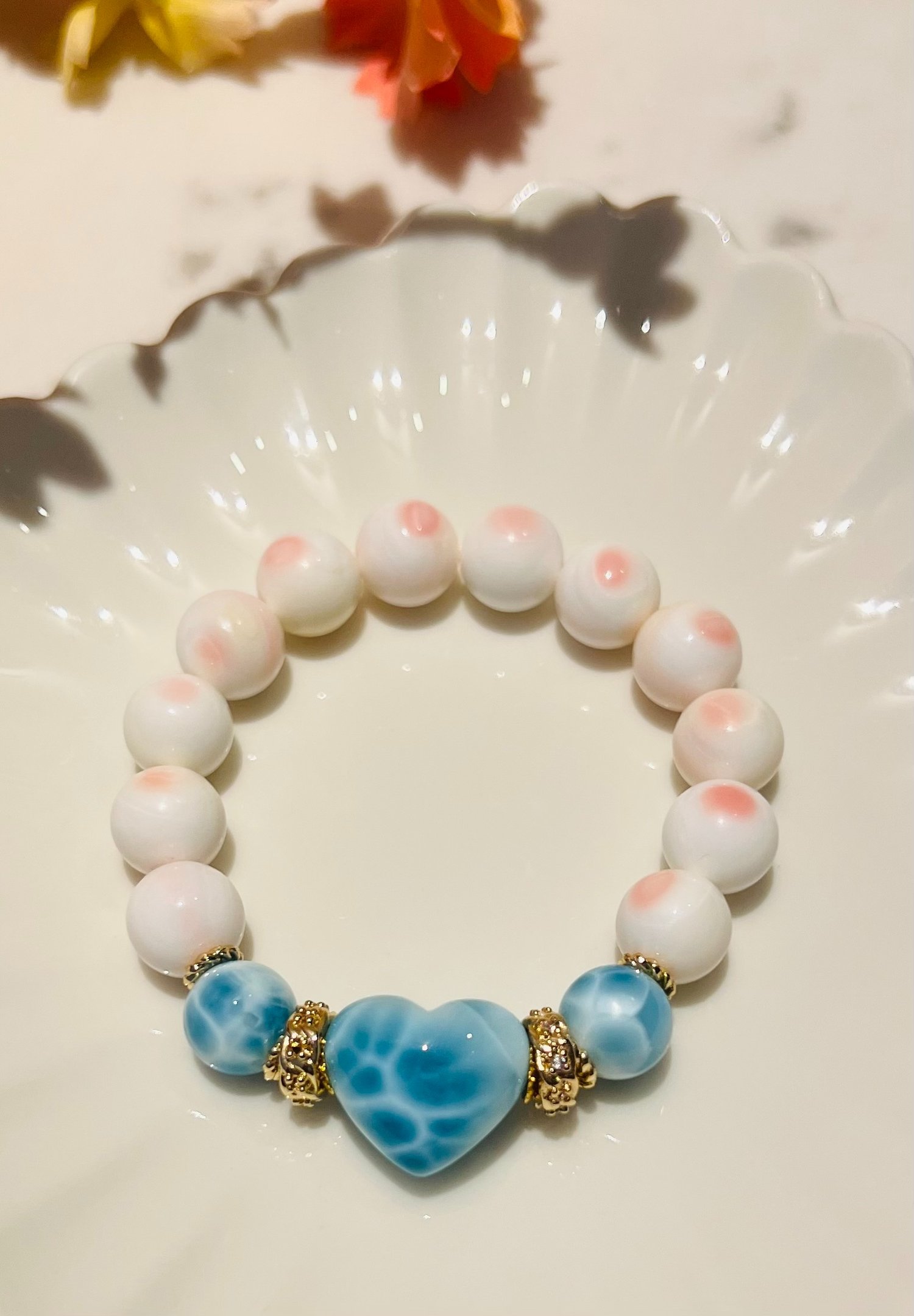
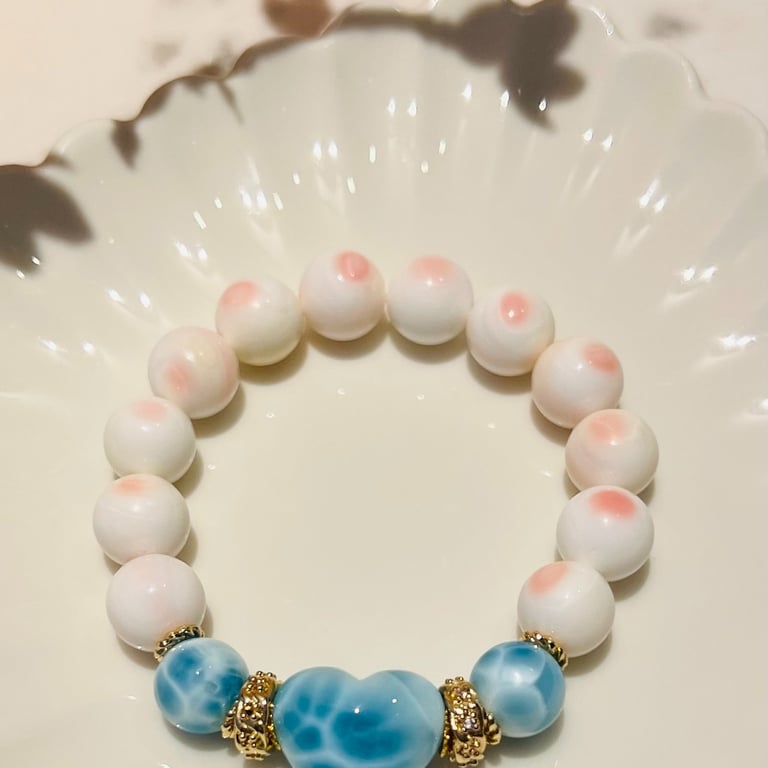
A Discovery That Almost Did Not Happen
There are gemstones whose histories stretch back thousands of years, and then there is Larimar — discovered as recently as 1974, when Miguel Méndez and Norman Rilling followed a trail of blue stones down a riverbed in the Dominican Republic to their source in the Baoruco Mountain Range. What they found there was something the gemstone world had never seen: a vivid, oceanic blue stone formed through volcanic activity, its color the result of copper impurities present during crystallization, its patterns unlike anything else in nature.
Larimar exists nowhere else on earth. It is found exclusively in that one mountain range, in that one Caribbean nation, under conditions so specific that no other deposit has ever been discovered anywhere in the world. That is not a marketing claim — it is a geological fact. And it gives every piece of Larimar jewelry a provenance that is as rare as the stone itself.
Long before the wider world took notice, the people of the Dominican Republic already knew what they had. Local artisans had been working Larimar into traditional jewelry for generations, drawn to its beauty and to the calming, healing properties they believed it carried. The stone was part of the cultural fabric of the island — a natural treasure that the land offered and the people honored. That history of craft and meaning runs beneath every piece of Larimar made today, whether its wearer knows it or not.
What You See When You Look at Larimar
There is a moment, the first time you see a high-quality piece of Larimar, where you find yourself looking for the water. The blue is that convincing. Not the flat, manufactured blue of a dyed stone, but something alive and shifting — the particular blue of a Caribbean sea on a clear morning, moving between turquoise and sky, deepening toward the center in ways that suggest both depth and light simultaneously.
What makes Larimar visually unlike almost any other gemstone is the white patterning that moves across its surface. Streaks and formations that curl and flow like waves, like the foam left by a retreating tide, like the particular moment when deep water meets pale sand. In Chinese tradition, this patterning is known as the tortoise mark — 龟背印 — a reference to the shell-like markings that carry their own auspicious meaning. Beautiful in its visual effect, and meaningful in its symbolism: the tortoise is one of the four celestial creatures of Chinese cosmology, associated with longevity, wisdom, and good fortune.
The fibrous mineral structure of pectolite — the mineral from which Larimar is derived — is responsible for this visual magic. The interlocking fibers within the stone scatter light in a way that animates the color and pattern, creating a dynamic quality that changes depending on how the light falls and the angle at which you hold it. No two pieces are ever identical. The pattern on each stone is its own — a record of the specific conditions of its formation, as unrepeatable as a fingerprint.
As a general guide to quality: the deeper and more saturated the blue, and the more defined and distinctive the white patterning, the more valuable the stone. The finest Larimar possesses both qualities together — a richness of color and a clarity of pattern that together create something genuinely breathtaking.
The Gemstone of Tranquility — and Why That Name Fits
Larimar has earned many descriptions over the years, but the one that has stayed most firmly attached to it is this: the Gemstone of Tranquility. Those who wear it consistently describe the same experience — a quieting. A softening of the mental noise that follows most of us through the day. A quality of calm that is difficult to attribute entirely to aesthetics, even when the stone is undeniably beautiful.
The metaphysical properties associated with Larimar centre on peace, emotional healing, and communication. It is believed to help the wearer achieve a meditative state more readily — not by suppressing thought, but by creating the interior conditions in which thought settles naturally. Many people who work with crystals find Larimar particularly effective in moments of tension or conflict, when the emotions are running high and the words needed to navigate the situation are not easily found. The stone is said to open and support the throat, encouraging honest, clear, and compassionate communication — the kind that resolves rather than escalates.
The connection to the sea is more than aesthetic. Water has been understood across cultures and centuries as a symbol of emotional fluidity, of the capacity to move through rather than against, to adapt rather than resist. Larimar carries that quality in its very appearance — and those who wear it often find that the reminder is more useful than they expected.
One Place, One Stone, One Chance
There is something worth sitting with in the fact that Larimar comes from only one place in the world. It is not mined in multiple countries, not sourced from a dozen deposits across different continents. It comes from one mountain range in one Caribbean nation, formed under conditions so specific that they have not been replicated anywhere else on earth.
That exclusivity is not incidental to the meaning of the stone. It is part of it. When you wear Larimar, you are wearing something that could only have come from exactly where it came from — something shaped by the volcanic history of the Dominican Republic, colored by the particular chemistry of its formation, patterned by the specific fibrous structure of its mineral composition. It is not simply a blue stone. It is that blue stone, from that place, carrying all of that with it.
The ocean it resembles is the same ocean that surrounds the island it came from. That is not a coincidence. That is, in the most literal sense, where the stone got its color — and perhaps, those who believe in such things would say, where it got its calm.
Here at Daintyxuan, our Larimar pieces are handcrafted and selected for the depth of their color and the distinctiveness of their natural patterning. Because what makes Larimar worth wearing is exactly what makes it irreplaceable.
Follow us on our social channels at:
First order? Use code QUEEN10 for 10% off
Sign up for our newsletter! Get the inside scoop of our new arrivals and pop-up events.
Do you need any assistance? You can contact us at: cs@daintyxuan.com
© 2026 Daintyxuan. All Rights Reserved.