
The Healer's Stone: Why Sugilite Is One of the Most Powerful Crystals You Can Wear
Not every crystal is simply chosen — some choose you. Sugilite, the luminous purple stone born from the ancient manganese fields of South Africa, has quietly captivated spiritual seekers and gemstone lovers for decades. Here's why this rare and extraordinary crystal might be exactly what your soul has been looking for.
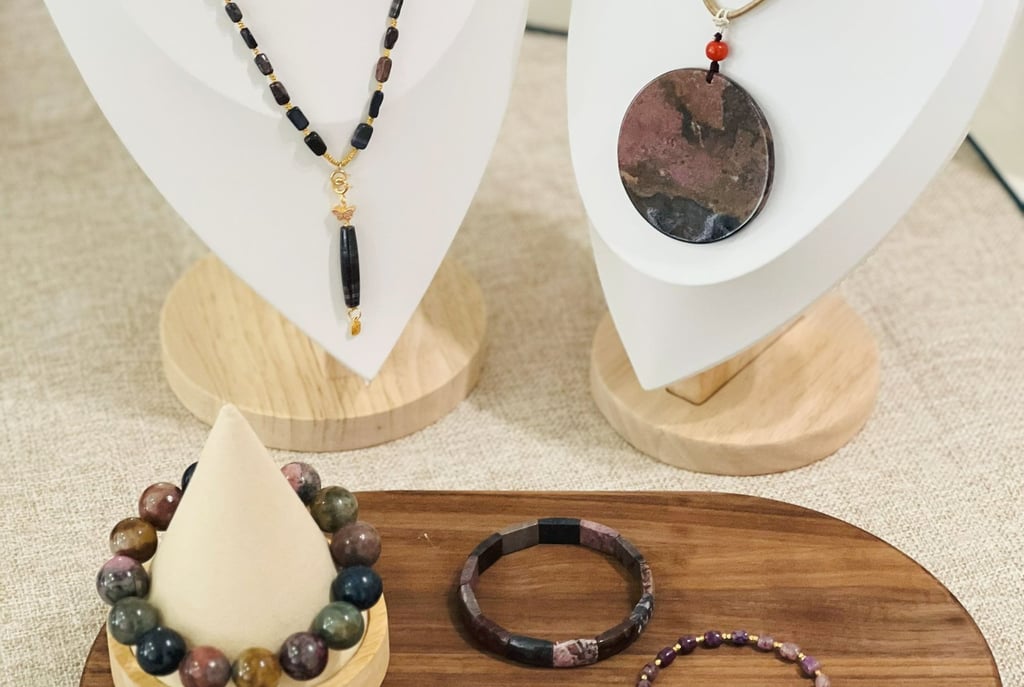
A Stone With a Story
There is something about sugilite that feels almost destined. It was first discovered in 1944 by Japanese petrologist Dr. Ken-ichi Sugi on the remote Iwagi Island in Japan — a quiet, almost accidental find that gave the world little indication of what was to come. Those early specimens were small and yellowish-brown, nothing that hinted at the breathtaking stone sugilite would eventually reveal itself to be.
It wasn't until the 1970s, when gem-quality deposits were unearthed in the Kalahari manganese fields of South Africa, that the world truly met sugilite. What emerged from the earth was something remarkable — deep purple to magenta stones, translucent and vivid, unlike almost anything the gemstone world had seen. Word spread quickly through collector circles and metaphysical communities alike. People felt drawn to it in a way that was difficult to explain. Sugilite had arrived, and it brought something with it.
The Stone of Love — and So Much More
Sugilite has earned many names over the decades, but two have stayed with it: the Stone of Love and the Healer's Stone. Both feel earned.
At its heart, sugilite is believed to carry the energy of unconditional love — the kind that doesn't flinch in the face of grief, sorrow, or trauma. For those moving through difficult seasons of life, it is said to open the heart and link it to the crown, creating a channel between emotional feeling and higher understanding. It does not ask you to bypass pain. It asks you to move through it with compassion — for others, and perhaps more importantly, for yourself.
Beyond the heart, sugilite is deeply regarded for the protection it offers. In a world that can feel relentlessly loud and overstimulating, many people — particularly those who identify as empaths or highly sensitive individuals — turn to sugilite as a buffer. It is thought to absorb and transmute negative energies, creating a kind of quiet shield between the wearer and the chaos outside. There is a reason people reach for it during hard times. It feels, to those who wear it, like being held.
For those drawn to spiritual practice, sugilite works with the crown and third-eye chakras in ways that feel genuinely expansive. It is associated with heightened intuition, deeper meditative states, and a clearer sense of one's own spiritual path. Those who work with it often describe a feeling of being guided — not pushed, but gently oriented toward something truer.
Beauty That Commands Attention
To speak only of sugilite's spiritual qualities would be to do its appearance a disservice, because this is a stone of extraordinary visual power.
The most coveted form — known as "gel" sugilite — is translucent, with a depth of purple that seems almost luminous from within. It is the rarest variety, and when you see it in person, you understand immediately why collectors pursue it with such devotion. Then there are the royal purple and magenta stones, opaque and richly saturated, with the kind of color that photographs cannot fully capture. Even the softer lavender shades carry a quiet elegance that is entirely their own.
No two pieces are alike. Like all things formed by the earth over millions of years, sugilite bears the marks of its own particular journey — the veining of manganese, the subtle shifts in hue, the way it catches light differently depending on the angle. It is a stone that rewards attention. The longer you look, the more it reveals.
Knowing the Real Thing
Because sugilite is rare and genuinely valuable, it is worth knowing how to recognize it. The color is your first guide — deep, saturated purples and magentas indicate quality, while grayish or blotchy stones suggest something lesser. Translucency, when present, is a mark of exceptional quality and commands a significantly higher value.
The cut matters too. Sugilite is most commonly shaped into cabochons — smooth, rounded, and polished — and a well-cut stone with minimal inclusions and strong color is something worth investing in. Be cautious of stones sold at prices that feel too good to be true. Imitations exist, made from dyed howlite or charoite, and without certification from a trained gemologist, they can be difficult to distinguish from the genuine article. When in doubt, ask. A stone this meaningful deserves to be authentic.
A Stone That Arrives When You Need It
There is a belief held by many in the crystal world — that sugilite doesn't simply get purchased. It arrives. It comes into your life at the moment you are ready for what it carries: deep healing, transformation, a willingness to grow through difficulty rather than around it.
Whether you find yourself drawn to sugilite for its extraordinary beauty, its protective energy, its reputation as a healer's companion, or simply an instinct you can't quite name — trust that pull. Some of the most meaningful things in life resist easy explanation.
What matters is that when you wear it close to your skin, something shifts. And sometimes, that is enough.
Follow us on our social channels at:
First order? Use code QUEEN10 for 10% off
Sign up for our newsletter! Get the inside scoop of our new arrivals and pop-up events.
Do you need any assistance? You can contact us at: cs@daintyxuan.com
© 2026 Daintyxuan. All Rights Reserved.